 X-Shop Education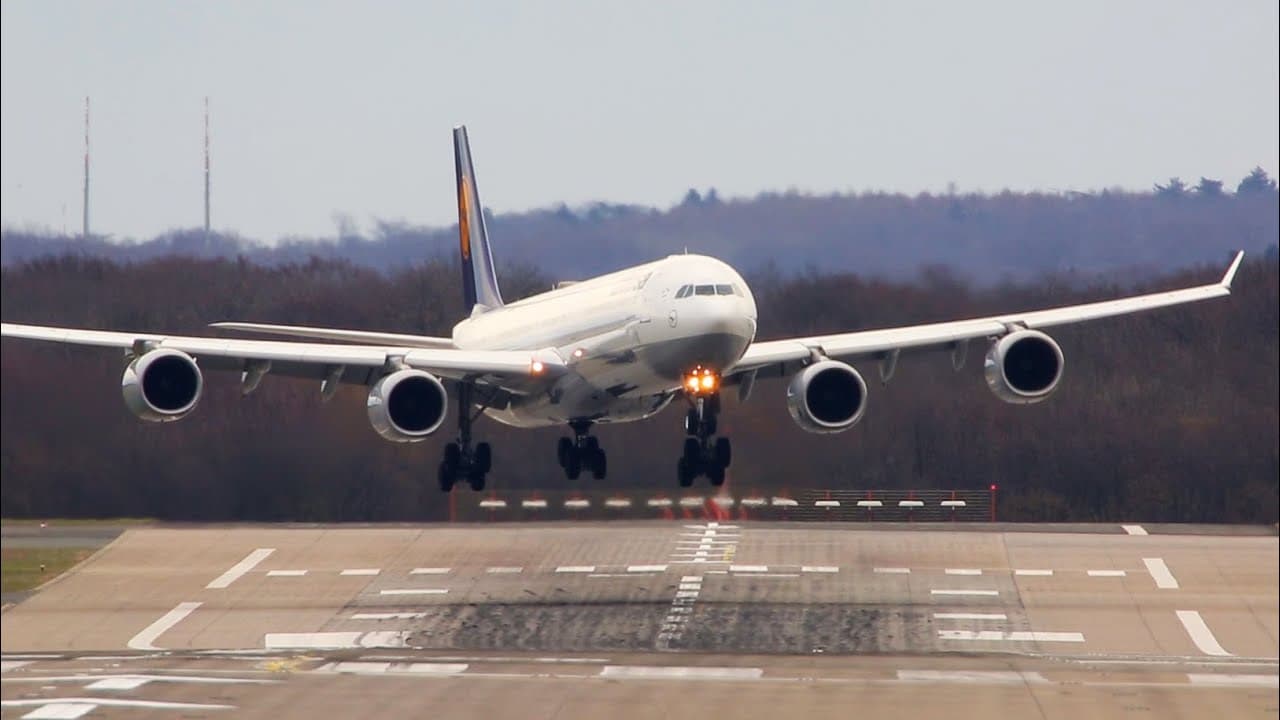
Landing in a crosswind: how pilots cope with crosswind
Side wind is one of the main enemies when landing. Let's look at how the crab and sideslip techniques work, what crosswind limit is considered safe, and what it looks like in the simulator.
What is crosswind and why is it dangerous
Crosswind is wind blowing at an angle to the axis of the runway. Unlike a headwind, which helps during landing, crosswind tends to push the plane to the side. If the pilot does not compensate for this deviation, the plane will touch the runway off-axis, which at best will result in a hard landing, at worst - a rollout or lateral load on the landing gear.
Crosswind strength is measured in knots (kt) and is always reported in METAR and ATIS information. For example, wind 270/15when landing on runway 24 will give a side component of about 10-11 knots.
How to calculate crosswind component
The full calculation is done according to the formula, but pilots use a simple rule:
- Angle between the wind and the strip 30° → lateral component ≈ 50% of the wind speed
- Angle 45° → ≈ 70%
- Angle 60° → ≈ 87%
- Angle 90° (purely lateral) → 100%
Example: wind 15 kt at an angle of 60° to the runway - crosswind component about 13 kt.
Each aircraft has a maximum permissible crosswind limit (demonstrated crosswind limit). For a Boeing 737 it is about 33–36 kt, for an Airbus A320 - 38 kt. Exceeding these values makes the landing officially unsafe.
Two main techniques for landing in crosswind
1. Crab (course lead)
The pilot turns the nose of the aircraft toward the wind so that the trajectory remains along the axis of the runway. The plane seems to fly “sideways” relative to its longitudinal axis, but moves straight.
Before touch down, the pilot aligns the nose with the runway (removes the crab) - this moment requires precision and timing. If you do not remove the crab before it touches, the lateral load on the chassis will be critical.
Pros: comfortable in a long descent, good handling. Disadvantages:requires precise alignment at the last moment.
2. Sideslip (wing low)
The pilot rolls the plane toward the wind, creating a roll, and at the same time keeps the nose along the axis of the runway usingthe opposite rudder. The plane flies straight, but is slightly tilted.
Touch occurs first on the windward main post, then on the second one, and lastly on the front one.
Pros: The nose is already on the strip, no need for alignment before touching. Cons:requires good coordination of pedals and ailerons at the same time.
Combined technology
In practice, most pilots use crab on glide path and transition to sideslip in the final seconds before touchdown. This allows you to take the pressure off the pilot during a long descent and accurately level the plane near the ground.
In the simulator
In MSFS and X-Plane, crosswind is handled very realistically. To practice:
- Set the wind 15–25 kt at an angle of 60–90° to the runway
- Use a manually controlled aircraft (no autopilot at the end)
- Start with the crab technique, then master the sideslip
- Pay attention to the lateral displacement on the glide path - this is the main indicator
Addons of the PMDG, FlyByWire or Fenix level very accurately simulate aerodynamics in a cross wind - they are the most interesting to learn.
Total
Crosswind landing is one of the basic skills of a pilot. Understanding how sideslip is calculated and knowing how to use the crab or sideslip technique makes the difference between a secure landing and a missed approach. The simulator teaches you this in a safe environment - take advantage of it.